Most Repairs Stay Locked
Replacing a screen, battery, charging port, or back glass is physical work on the housing and internal hardware, so the technician does not need to browse personal files.
Handing over a phone for repair can feel like handing over your photos, messages, and financial apps. At Phoenix Phone Repairs in Phoenix, customers ask whether a technician can see that private data. Modern smartphone encryption generally keeps files locked without the passcode, and most physical repairs do not require unlocking the device.
Replacing a screen, battery, charging port, or back glass is physical work on the housing and internal hardware, so the technician does not need to browse personal files.
After some repairs, a technician may need permission to verify touch response, biometric unlocking, the camera, battery health, storage capacity, or charging performance.
Ask which exact test needs an unlock, share a passcode only when necessary, and have any code entry and its purpose documented on the repair order.
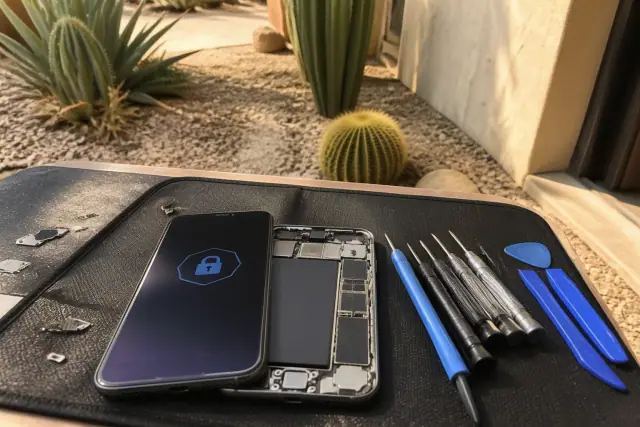
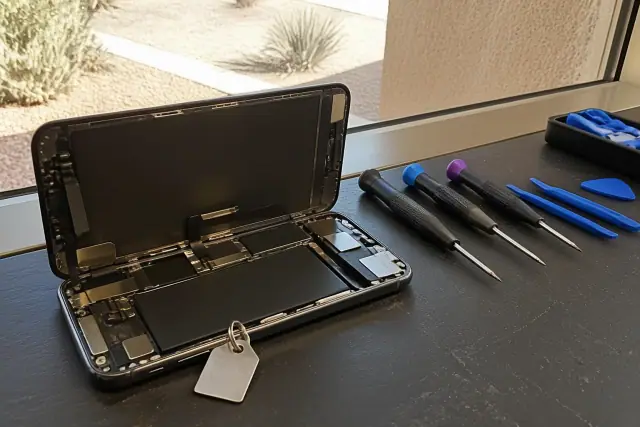
The device powered off or locked beside repair tools, with no personal content visible. This makes the separation between physical repair and data access clear.
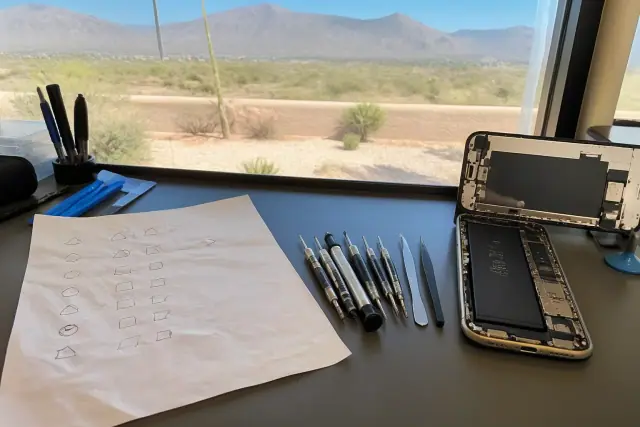
An intake form recording whether a passcode is needed and the limited test it supports. Clear documentation gives the customer and technician the same expectations.
A customer backing up the device, signing out of sensitive apps, disabling biometric unlocking if desired, and removing the SIM and memory card before drop-off.
Hardware-backed encryption ties access to the device passcode, so physical possession alone does not unlock photos, messages, app contents, or cloud accounts.
A repaired touchscreen, biometric sensor, camera, or charging connection may need a brief function check; requested data transfer requires explicit consent and an unlocked device.
Back up to a cloud account or computer, sign out of banking and financial apps, remove removable cards, and ask whether your specific repair requires code entry.
Do not share a passcode when a shop cannot explain which repair test needs it or will not document the requested access and purpose.
| Repair Situation | Is an Unlock Usually Needed? | Privacy Step |
|---|---|---|
| Screen, battery, charging port, or back glass repair | No for the physical repair itself | Keep the device locked unless a specific function test requires access. |
| Touchscreen, camera, or biometric function testing | Sometimes, with permission | Ask which test needs access and have it noted on the repair ticket. |
| Requested data transfer | Yes | Give explicit consent and remain involved while the unlocked device is used. |
| Before any drop-off | No | Back up data, sign out of sensitive apps, and remove removable cards. |
A technician can hold and disassemble a modern smartphone without gaining access to its encrypted files. If you authorize an unlock for testing, the technician may briefly see the home screen, battery-health percentage, or storage capacity, but that does not require opening photos, messages, or app contents. Written privacy procedures should limit passcode use to the stated function check and record why access occurred.
The repair type matters more than the shop's physical possession of the phone. Phoenix summers regularly push past 110°F from May through September and accelerate battery wear, but a battery replacement is still physical work that normally does not require browsing files. Screen repairs may require permission for touch, camera, or biometric checks, while a requested transfer of contacts, photos, messages, or app data requires explicit consent and access.
Can a technician view photos without the passcode? Hardware-backed encryption keeps the file system locked. Can a shop transfer data? Yes, when you request the service, give explicit permission, and provide access. Can standard repair tools bypass a screen lock? No; the soldering stations, spudgers, and adhesives used for hardware work are separate from specialized forensic extraction equipment, and unauthorized access can violate the federal Computer Fraud and Abuse Act.
Tell Phoenix Phone Repairs what problem your device has and ask whether that repair requires an unlocked screen. We can explain the function test and document any requested access before work begins.